
Ordering guide
How to order a wheelchair with Scotts
What happens between the first call and the first delivery, what your prescriber has to document, and how resupply runs afterward. Written for patients and the people helping them.
Key takeaways
- Three things have to line up: a need, a prescriber’s order, and documentation in your chart. We handle the third with your prescriber so you do not have to.
- We verify coverage before anything is delivered and tell you what your plan says your share is.
- Resupply runs on the policy’s schedule, tracked by us and confirmed with you before each shipment.
How it works, step by step
- Tell us what you need. Call (800) 304-7030, start in the order wizard, or have your clinician send a referral with the documents attached. If you already use a product, the manufacturer code on the box is the most useful thing you can give us: it settles size, style and fit without guesswork.
- We verify your benefits first. Medicare Part B, Florida Medicaid, Medicare Advantage and most commercial plans. Before anything ships you hear what the plan covers and what your share is, and if it is not covered we say so and quote a private-pay option instead.
- We collect the order and the documentation from your prescriber. For a wheelchair that usually means:
- A written order and a face-to-face evaluation documenting the mobility limitation
- Documentation of why a cane or walker will not meet the need, and that the chair can be used safely in the home
- Seat width, seat depth and user weight
- For power mobility, a specialist evaluation — call us before assuming this is a quick order
- Delivery or shipping. Delivered and set up across South Florida, or shipped across Florida, with the instructions you need and a phone number for the questions that come later.
- Resupply, if it applies. Supplies that recur are tracked on the policy’s schedule. We check in before each shipment; nothing ships that you did not ask for. How automatic resupply works.
What Medicare looks for
Wheelchair / scooter / power mobility evaluation is covered under Medicare policy LCD L33788 / L33789, Manual Wheelchair Bases / Power Mobility Devices. In plain words, the chart has to show this: CLINICAL MOBILITY EVALUATION — the diagnosis is only a trigger. First document an in-home MRADL limitation that cannot be safely or sufficiently resolved by cane/walker and confirm home access, willingness and expected use. Manual chair: patient can safely self-propel or an available caregiver can push. Scooter/POV: upper-extremity function is insufficient for an optimally configured manual chair, and the patient can transfer, operate the tiller, maintain posture and use it safely in the home. Power wheelchair: basic PMD criteria are met, the patient cannot meet the scooter transfer/tiller/posture path, and the patient or available caregiver can safely operate the PWC. Match weight class. Obtain the face-to-face mobility evaluation, SWO/WOPD and any CMS prior authorization before delivery. Only one wheelchair is payable at a time. The diagnoses it names include hemiplegia, paraplegia / quadriplegia, multiple sclerosis, parkinson disease, sequelae of cerebral infarction. Resupply under the policy is capped rental, 13 months.
Wheelchair seat + back system is covered under Medicare policy LCD L33312, Wheelchair Seating. In plain words, the chart has to show this: Choose the seat and back independently from the documented width and clinical need. A scooter, transport chair, or power wheelchair with captain's chair does not support separately billed cushions. Skin-protection seating requires a current/past seating-surface ulcer or impaired sensation/inability to weight shift. Positioning seating/back requires significant postural asymmetry. Combination skin-protection/positioning seating requires both sets of criteria. The diagnoses it names include paraplegia / quadriplegia, pressure ulcer, hemiplegia, multiple sclerosis, parkinson disease. Resupply under the policy is one-time purchase.
Wheelchair reclining-back review is covered under Medicare policy LCD L33792, Wheelchair Options/Accessories. In plain words, the chart has to show this: The covered manual wheelchair must already exist and the reclining option needs its own medical necessity. Convenience or rest alone is not coverage. Resupply under the policy is capped rental, 13 months.
Wheelchair accessories (elevating legrests, anti-tippers) is covered under Medicare policy LCD L33792, Wheelchair Options/Accessories. In plain words, the chart has to show this: Each accessory carries its OWN criteria and is not covered simply because the chair is. Anti-tipping devices and similar are covered where the record shows the specific safety need. The wheelchair itself must be covered first. The diagnoses it names include paraplegia / quadriplegia, hemiplegia, muscle weakness, sequelae of stroke. How often the policy allows a replacement depends on the item: capped rental, 13 months; one-time purchase.
Policies change and plans differ; the link above is the current text. We do not publish allowances or quantity limits here because the number that applies to you depends on your plan and your chart. Ask us and we will tell you yours.
Products people order
The manufacturers’ own photographs, shown under our dealer agreements. Pick one to check coverage and order it; sizes and pack counts come next.
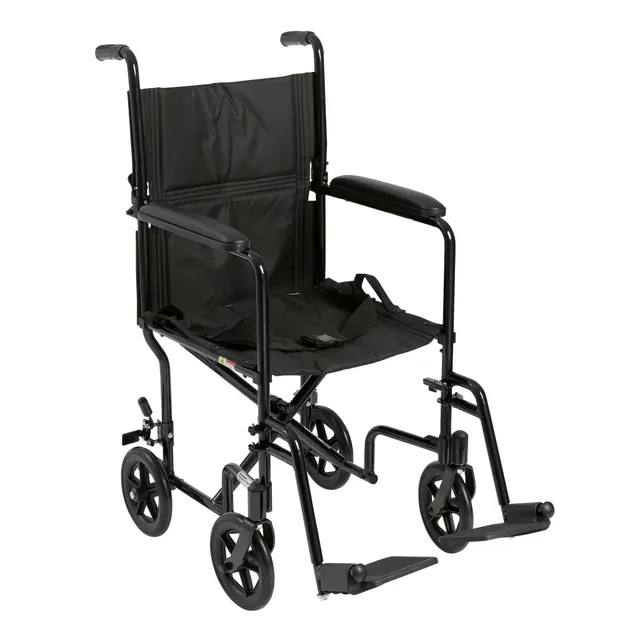 Drive Medical19" Aluminum Transport Chair, blue
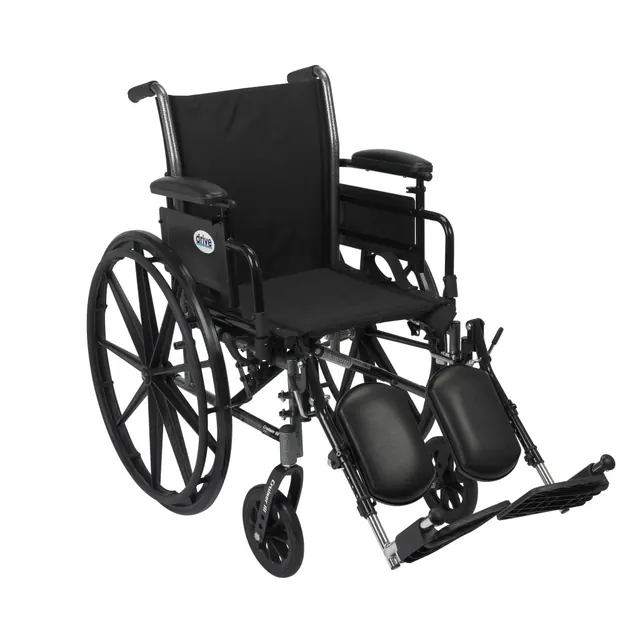 Drive MedicalCruiser III Manual Wheelchair
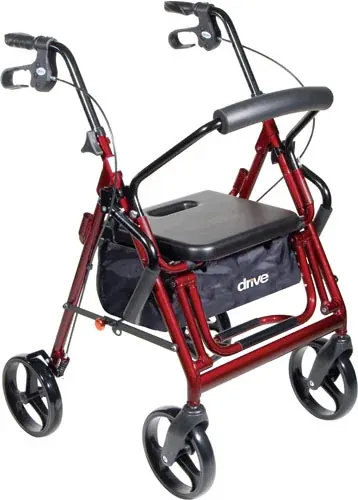 Drive MedicalDrive Medical Duet Rollator/Transport Chair — 8" Casters
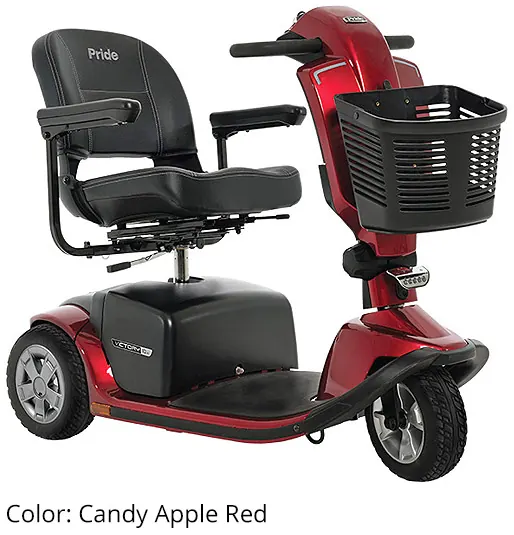 PrideVictory® 3-Wheel Mobility Scooter
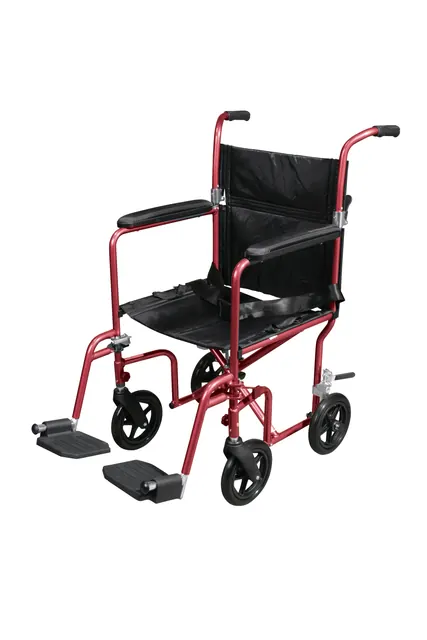 Drive MedicalDrive Medical Aluminum Transport Chair — 8" Composite Wheels
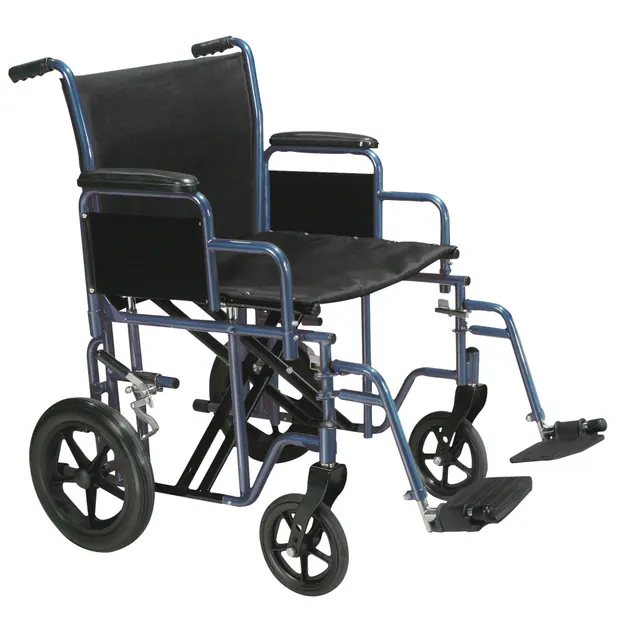 Drive Medical20" Bariatric Steel Transport Chair, blue
Brands we carry
Drive Medical, Invacare, Graham Field, Compass Health, Medline.
Questions people ask
Manual or transport chair — which do I need?
Why does the cushion matter so much?
Can I rent instead of buying?
Related
About this guide
This is general information written to be useful, not medical advice, and it is not a coverage determination. It does not replace what your own clinician has told you about your own situation — where the two differ, follow your clinician.
We deliberately publish no prices, allowables or fee-schedule figures. Those vary by plan, state and year, and a stale number is worse than none. Call (800) 304-7030 and we will verify your actual benefit.
Not sure where to start?
Call us and tell us what happened — a surgery, a new diagnosis, a discharge date, a supply you keep running out of. We will tell you what is usually needed, check your benefits, and ask your prescriber for the order if you do not have one yet.